The four-word letter
Anxious PeopleThe four-word letter is the note Man on the bridge sent to Zara before he jumped, and its importance lies as much in its long silence as in its brief message. Zara keeps it unopened for ten years, carrying it through a life shaped by her memory of a stranger’s death and a girl’s rescue. When Nadia finally opens it and reads the words aloud, the note offers Zara a different way to understand the guilt she has carried. She later lets it drift away across The bridge, turning the letter’s passage from hand to water into a quiet act of release.
Origin and Custody
Ten years before the letter is opened, Zara finds it on her doormat. Man on the bridge has written his name neatly on the back of the envelope. She remembers meeting him, and the town is small enough that she can connect the name to the man whose body the police found in the water, although the newspapers never published his identity. The note is not an anonymous message or a rumor: its address and sender tie Zara personally to the death.
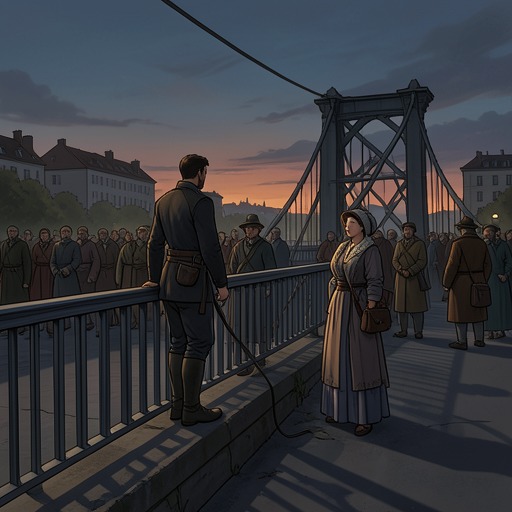
Zara has also witnessed what happened on The bridge the week after Man on the bridge climbed onto the railing. Hidden in the darkness, she sees a girl climb onto that same railing and a boy run over to save her. Zara stands shaking and does not move; she remains there until an ambulance takes the girl to hospital. Afterward, she walks onto The bridge and finds the girl’s wallet and identification card. The girl is Nadia. The letter and this memory therefore become bound together for Zara: the dead man’s message sits beside the image of Nadia being saved, and the question of why one person jumped while another survived becomes a question Zara cannot leave alone.
Ten Years Unopened
Zara carries the letter in her handbag every day, but does not open it. For a decade she follows Nadia’s life, education, and early career from a distance, never daring to approach her. She also looks toward The bridge from balconies of apartments for sale. Zara fears returning to the place where the man died, and fears that learning the truth about herself through Nadia might lead her to jump too. She believes she bears the guilt and may be the bad person; at the same time, she wants to hear what distinguishes Man on the bridge from Nadia, even as she knows she may not want the answer.
The unopened envelope makes that conflict tangible. Zara has held it so many times that, when the moment of reading finally comes, the narrative counts the occasions as ten thousand. Its contents remain unknown not because the words are lost, but because Zara cannot yet face what she imagines they might say. The delay gives the letter a double presence: it is a message from a dead man, and a sealed question Zara carries about her own responsibility and survival.
Reading the Message
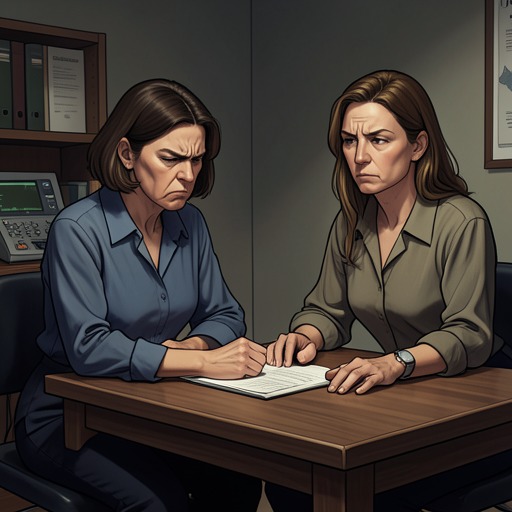
Exactly ten years after the man jumped, Zara comes to Nadia, now a psychologist, with the letter. She wants someone to read it aloud and, when the words bring her close to a crisis of her own, to stop her from jumping. At first she can barely explain why she has come; she manages only to address Nadia by name before faltering. Slowly, she lets the envelope slip from her hand. Nadia picks it up, slips a finger beneath its flap, and draws out the ten-year-old handwritten note.
The message is only four words: “It wasn’t your fault.” Man on the bridge wrote down what he thought Zara needed to know, and this was the last thing he ever told anyone. The note does not give a detailed account of his death or explain every uncertainty Zara has carried. Instead, its plainness answers the particular burden she has assigned herself: the belief that she is responsible for his death. Nadia’s act of reading makes the words available to Zara at last, while the letter’s brevity leaves their force concentrated in a single statement.
Release and Significance
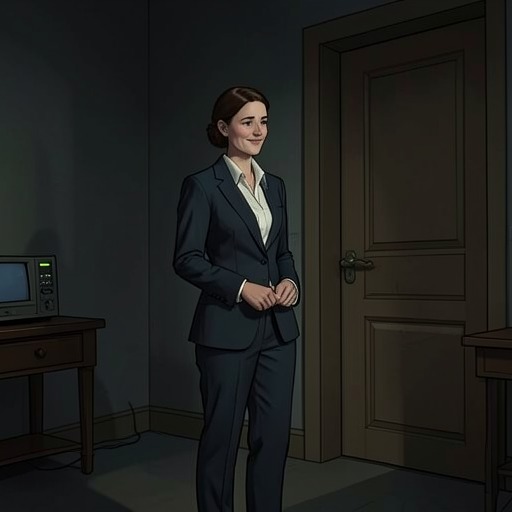
After the note is opened, Zara goes to The bridge. The letter slips from her fingertips and sails out across the water; Zara is already walking toward the far side as it reaches the surface. Lennart is waiting in a car. Their eyes meet, and he lets her turn the music up as loud as she wants. The letter’s physical release accompanies Zara’s departure from the bridge rather than ending in another jump. She intends to do her utmost to get tired of Lennart, a small, forward-looking intention set against the years in which she has been unable to approach either the letter or Nadia.
The note also links separate acts of care. Nadia’s life as a psychologist grew from her own experience of being rescued on The bridge, and she works with people in pain by offering them a way down from the edge. In their meeting, the woman who once watched Nadia’s rescue can finally bring her the message she has carried; Nadia, in turn, becomes the person who opens it. The four words do not erase the past, but they interrupt Zara’s isolation and self-accusation. Their journey—from the doormat, to the handbag, to Nadia’s hands, and finally across the water—gives the letter its larger meaning: a message withheld for years can still reach someone, and being told that the death was not her fault makes it possible for Zara to walk away.